The Iconic Mentawai boat trip
The Iconic Mentawai boat trip
The Iconic Mentawai boat trip
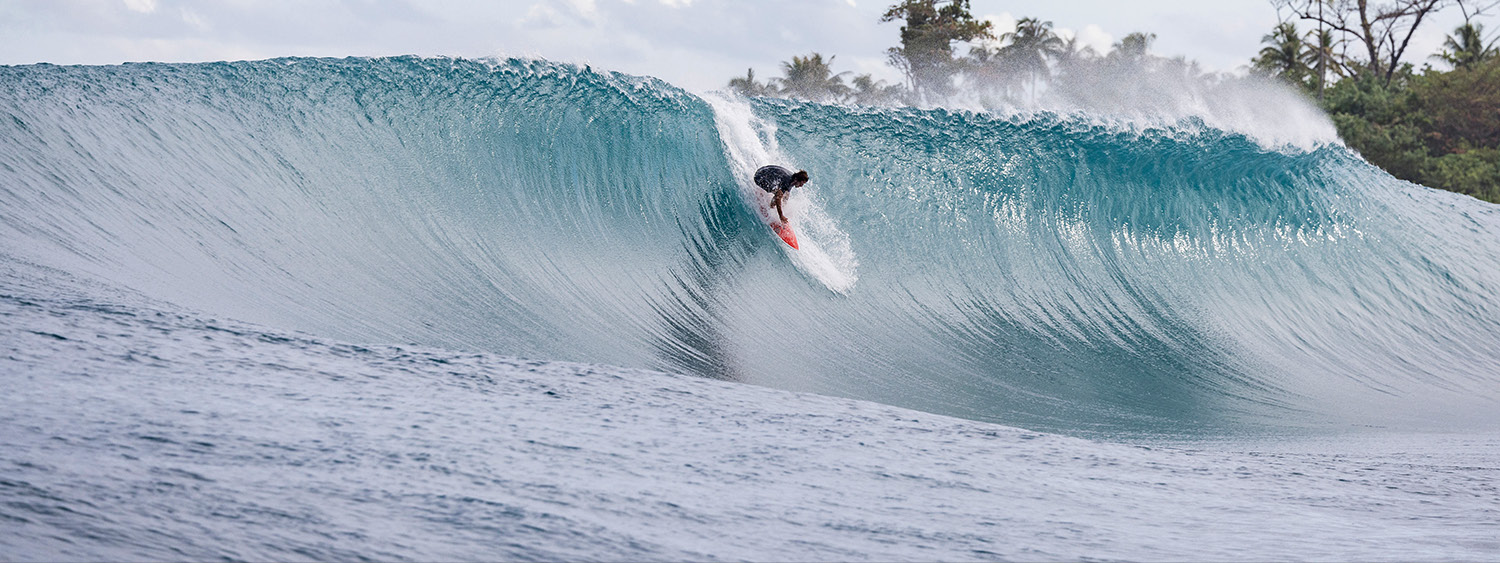
Off the western coast of the Indonesian island of Sumatra, the Mentawai Islands are known for ideal surf conditions and a storied past. The Mentawais are comprised of about seventy islands, some of which are uninhabited and remain essentially untouched.
The unique reef formations around the Mentawais ensure that waves break absolutely perfectly, and the weather patterns mean consistent swell year round. The summer months, from June to August, bring peak conditions.
Over the years, many expeditions have visited the Mentawais. Some have changed names or crew, some have gotten washed ashore during tsunamis, others have sunk, but one operation remains the gold standard, the expert in the area: Indies Trader.
The MV Indies Trader
Our 72-foot vessel, the MV Indies Trader, wasn’t always used for luxury surf trips. In fact, quite the opposite. The Indies Trader family has a fascinating history, from working as a salvage vessel to a research station.
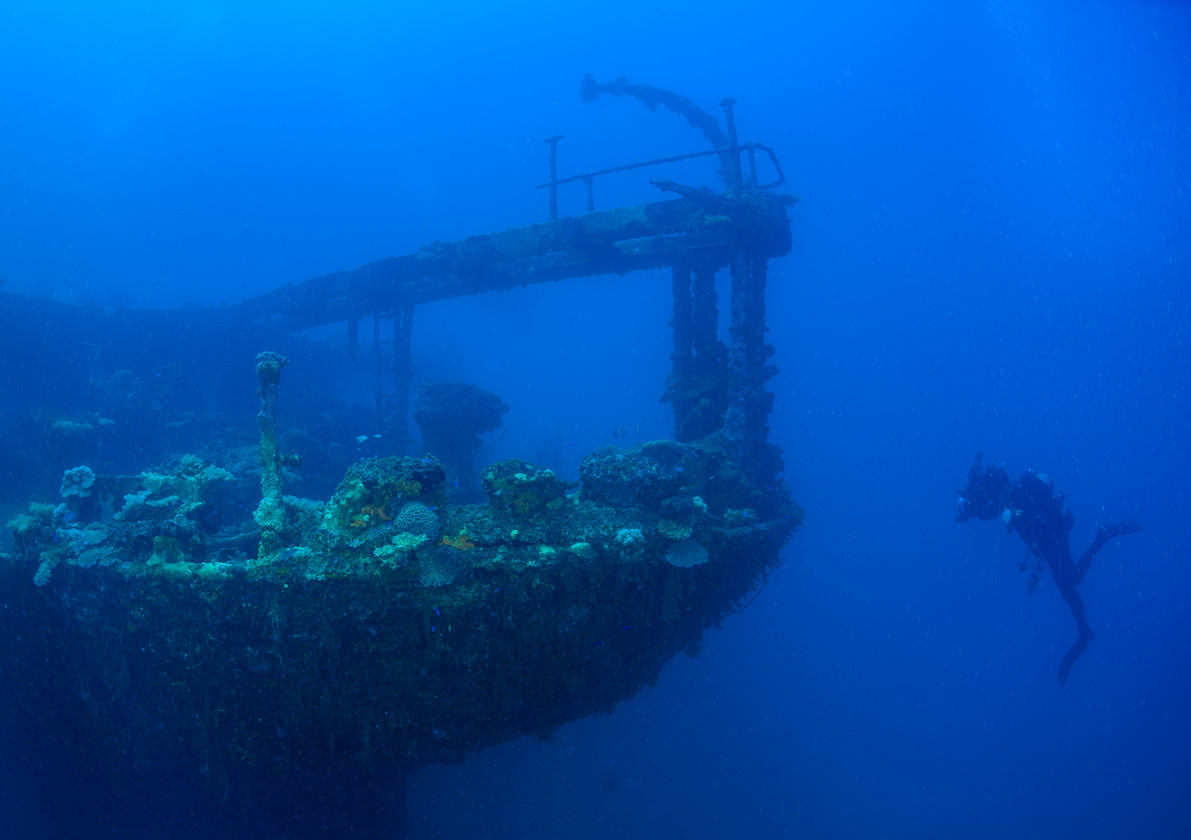
During the 1980s, the original Indies Trader primarily operated salvage missions. Its crew would dive to recover lost equipment and even treasure from ancient shipwrecks. During these salvage trips, Martin Daly and his crew stumbled upon some of the best surfing in the world, fueling his desire to find the best breaks.
In the late 1990s, the Indies Trader embarked on a one-of-a-kind research mission, the Quiksilver Crossing, during which scientists studied reefs around the world. The mission was also an important one for the surfing community, as over 100 new surf spots were discovered.
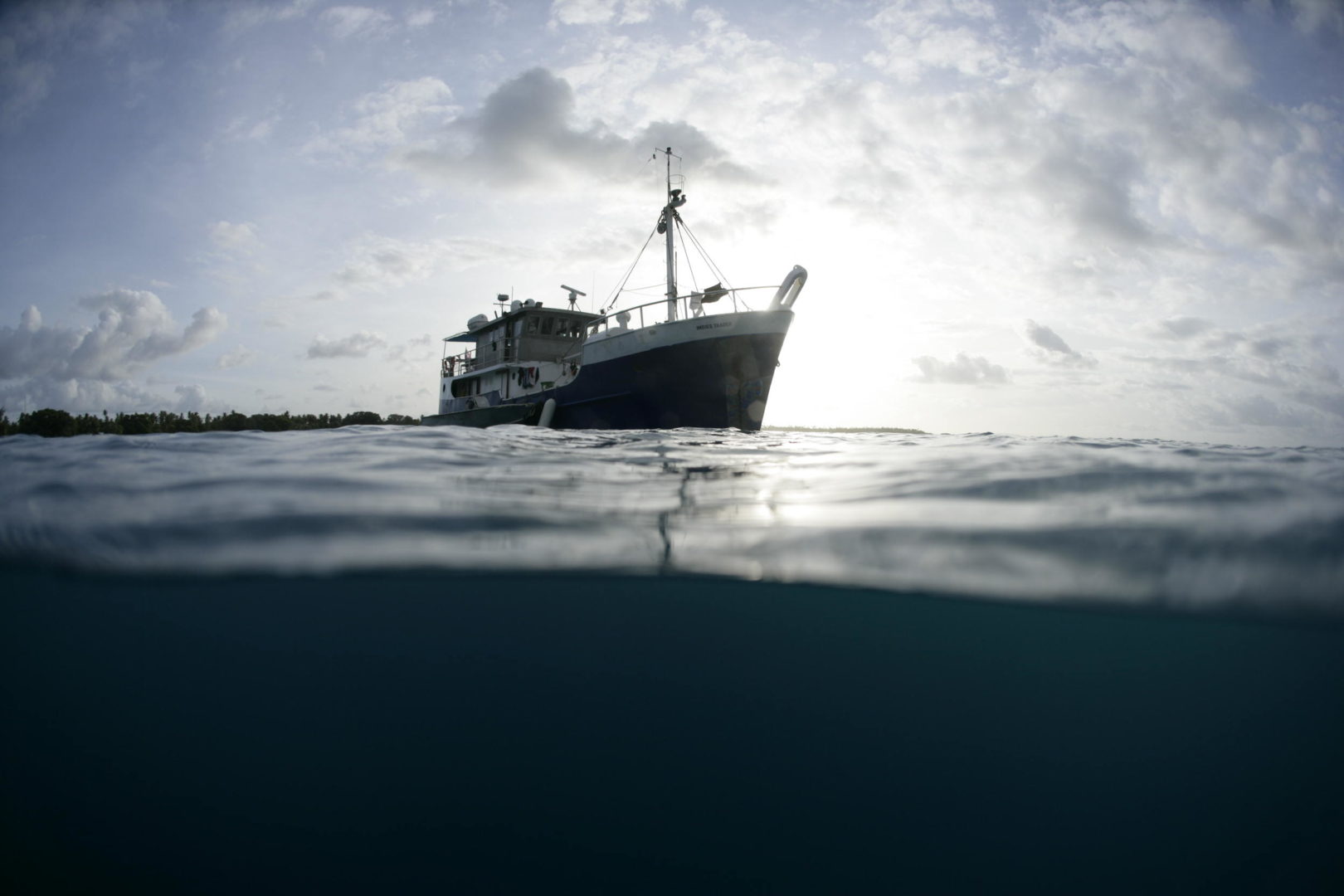
Today, the Indies Trader 3, which currently serves the Mentawais and Sumatra, Indonesia boasts all the modern amenities of a luxury charter vessel. With top-of-the-line technology and highly trained crew, it’s the world standard of small leisure ships.
I returned to Indonesia with my reputation in Tatters. We still had The Rader, and I concentrated on running the commercial diving operation with moderate success. Frank focused on keeping the treasure-hunting company alive. I wanted to go surfing; Frank wanted to go treasure hunting. We started to go in different directions.- Martin Daly
The Rader
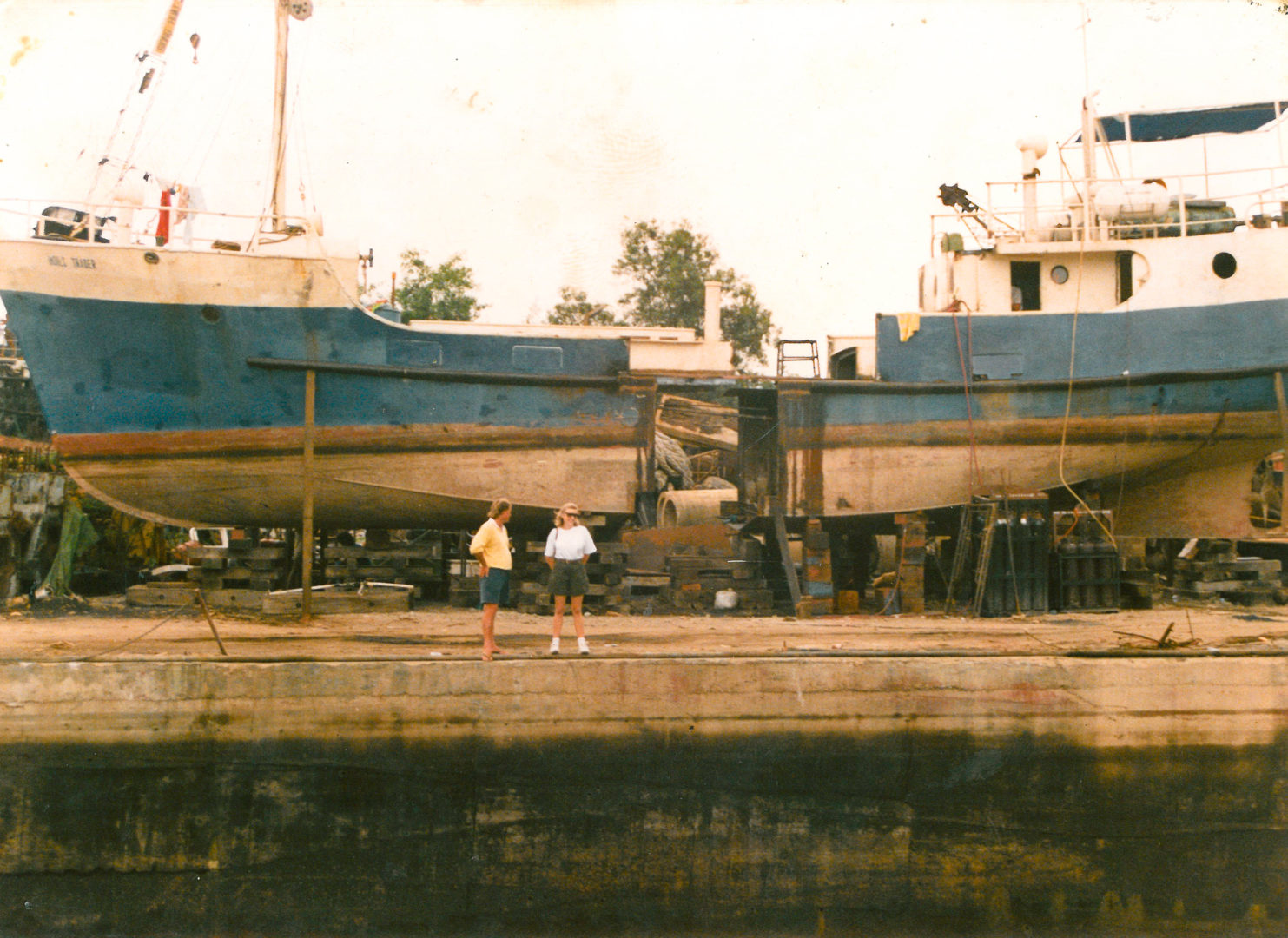
The MV Indies Trader is a legendary boat, whose history spans decades and continents and has done more surf exploration than any vessel in the world. She was originally named the M.V. Rader and was built in 1972 by K.B. Welding Works in Bulimba on the Brisbane River, Brisbane. The vessel was designed by noted Australian naval architect Mr. R. A. James.
The vessel was built for Mr. David Barnett. Dave, a New Zealander, was raised in Fiji just after WWII. Dave, a surveyor by trade, was once New Zealand’s Spearfishing Champion and a runner up in the 1966 World Spearfishing Championship in Tahiti. He abandoned his trade and came to Australia in the mid 1960’s with his girlfriend Verna (now his wife) and secured one of South Australia’s first Abalone Licenses. He worked out of Streaky Bay. In the late 60s he hooked up with a group of divers who were onto a small bonanza. Copper prices were at an all time high. Scrap brass and manganese bronze were fetching the equivalent of $20,000 a ton in today’s money. New Guinea, The New Hebrides, Solomon Islands, and Indonesia were littered with WWII wrecks whose propellers and condenser tubes were suddenly worth serious money as scrap. It was like a mini gold rush! Barry May, Wally Gibbens, Desy Woodleigh, Ron Hutcho, Kevin Baldwin, Bruce Trotter, Peter Baker, and Jim Forrest were some of the main characters from this era.
The “Rader” was built specifically for salvaging scrap; the vessel’s main features are an extremely large cargo hold, a 15 ton bow lift, a 5 ton cargo boom, specially reinforced port side gunnel, and ballast tanks for lifting.
Around the end of 1972, after scrapping most of the known wrecks in Papua New Guinea, the search for scrap brought the vessel to Irian Jaya, the Moluccas, and then Bali, Indonesia. Dave scored a job to widen the Benoa harbour entrance using explosives. As the scrap price deteriorated and he had done most of the available wrecks in Indonesia, he turned to civil dive contracting and regular salvage work, refloating and salvage of several ships and barges. Whereas most companies would rely on large equipment and brute force, Dave specialized in ingenuity and light equipment, often using the Rader and the equipment onboard only.
Martin Daly & Dave Barnett at One Palm Point Discovery
In 1982, Martin Daly ran into Dave and the vessel out in the Arco Ardjuna Oilfield. Martin was working as a commercial diver on a large platform inspection vessel. Martin invited Dave and his crew onboard for dinner and Martin quickly realized that he had run into one of Australasia’s genuine diving legends. Martin fell in love with the vessel immediately. Dave had a contract to clean the marine growth off several production platforms and for a few weeks they worked in the same area and got to know each other pretty well. Later that year, Martin chartered the vessel from Dave, and he and five friends went to Panaitan, the south coast of Sumatra, and some of the offshore Islands, discovering One Palm Point and other breaks in that region.
In 1983, after returning from a 6-month stint as a saturation diver in Japan, Dave hired Martin as part of his diving crew on the Rader. For the next three years Dave taught him about salvage and explosives, and he passed on his knowledge about underwater inspection. Martin was amazed at how well equipped the vessel was and the variety of work they could perform using her.
In 1986, Dave decided to retire to Perth, Australia, and Martin offered to buy the boat. Martin recalls “I didn’t have anywhere near enough money but after much maneuvering, with some financing from Dave and pulling in a partner, Frank Taylor, in late 1986 we were the proud owners of the infamous Rader.”
On a dark and stormy night, I bolted, sacrificing all the money I had earned for 2 years. At least I still had the boat. We drove non stop to Batangas, Phillipines via the Sulu Sea, the whole way terrified of running into the Indonesian Navy as the word would have to be out.- Martin Daly
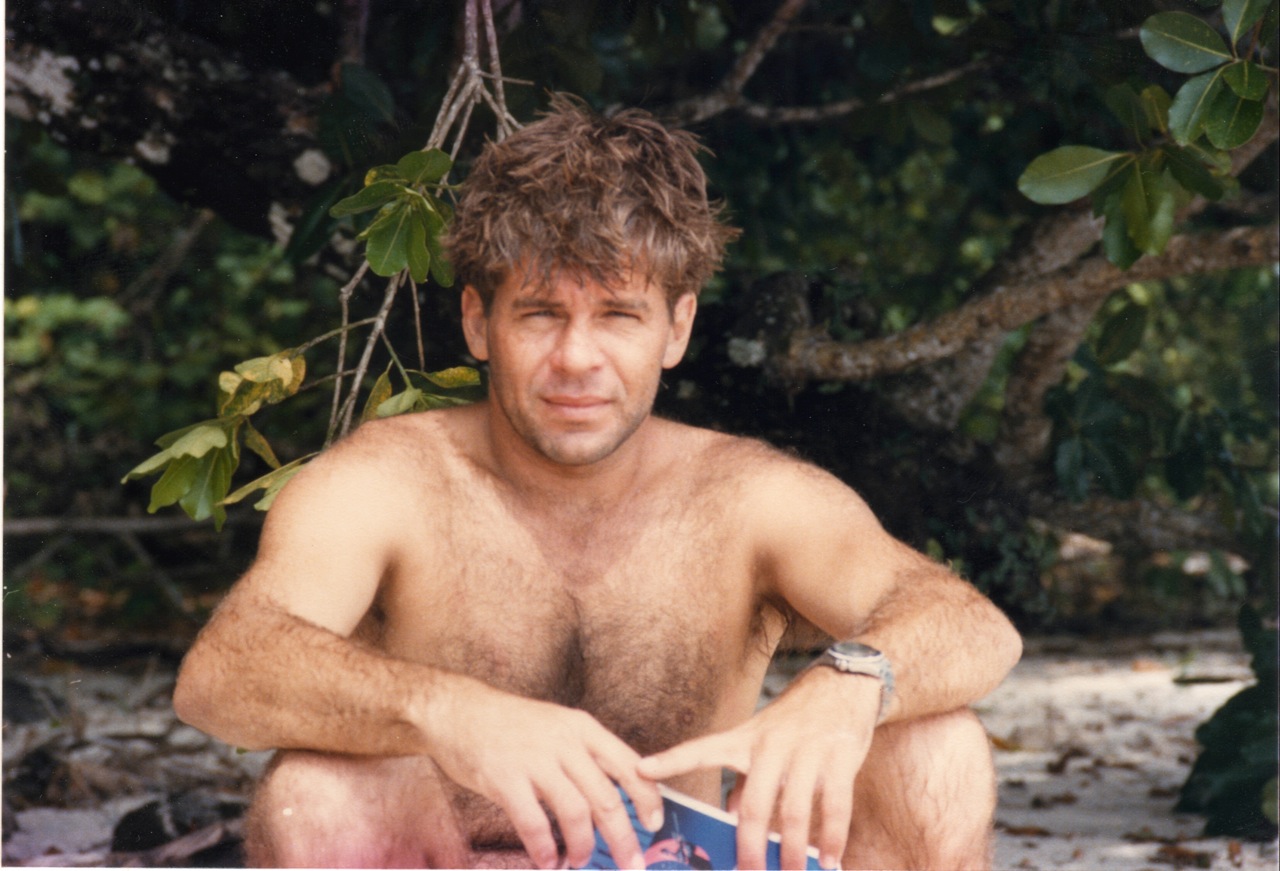
Frank Taylor - Diving, shipwrecks & treasure
Frank was a wealthy adventurer. He had been a fighter pilot in The Vietnam War and a genuine aviation legend, having won the Reno air races, the world record for fuel quarter-mile land speed, and the world airspeed record for piston driven aircraft all in one year. His new passion was treasure hunting.
Dave’s last job before handing the boat over to us was the successful salvage of a Dutch porcelain wreck in the South China Sea. Martin ran the diving operation and did pretty well out of my small share of the cargo.
Martin and Frank formed a diving/salvage contracting company in Indonesia and floated a public treasure-hunting company on the Vancouver Stock Exchange. Martin went to work in Indonesia running the commercial diving operation while Frank traveled the planet, negotiating salvage rights for old shipwrecks in various Asian countries.
Martin and Frank next mounted a huge multimillion dollar salvage expedition to China in 1997 using a state-of-the-art, dynamically positioned saturation diving vessel, the M.V. “Stephaniturm”. The job was unsuccessful; they found the shipwrecks and dived on them for over a month, but the Chinese had already worked the wrecks and the operation was a disaster.
In late 1989, the relationship with the Indonesian partner deteriorated to full confrontation. For registration reasons, in order to operate in Indonesia, the vessel had to be in his name. It became clear that he was increasingly referring to it as his own boat, and there was imminent danger of losing everything. Meanwhile, Frank had negotiated permission to salvage old shipwrecks in the Philippines. The diving business was just starting to take off in Indonesia. Martin had just completed a contract to remove 28 subsea wellheads for Arco. Frank wanted to bring the boat to the Philippines and search for old wrecks.
When Martin tried getting clearance to leave Indonesia all sorts of official obstacles started to pop up. He had said that he wanted to go to Singapore for docking, but after 2 weeks of trying he still could not get clearance. Martin’s Indonesian sponsor wanted him to sign a charter agreement to use his own boat and pay his sponsor a lot of money upfront; his sponsor owed Martin $200,000 dollars from the last contract he had performed for Arco.
The Philippine Salvage job was a disaster; they had the license, the technology, and the expertise but no target, no research, and not enough money.
Frank would only use investors’ money, never his own, and all the money Martin had left went into the operation. They went diving on every shipwreck that had been already salvaged and were successful in pulling about 200 pieces of high-quality, ancient Chinese porcelain from a wreck that had been worked by several parties over the previous 10 years or so. The Filipino authorities confiscated the porcelain because Frank had not paid the $5,000 bond for the salvage permit. The vessel was deteriorating rapidly, the pair’s visas had expired, the boats’ paperwork had expired, one of the crew didn’t even have an entry stamp in his passport, and Frank said that there was absolutely no money left for the operation. Martin contacted Dave Barnett and hinted that the boat could be seized at any moment by the Filipino Coast Guard for being in the country illegally. Dave jumped on the next plane. Martin and Dave decided to give Frank an ultimatum. Find some money, sort out all the problems with the paperwork, and get the boat back into good order or Dave and Martin were taking over the boat to save losing it altogether. Frank conceded, and on another dark and stormy night with a tropical cyclone bearing down on us, Dave and Martin once again bolted, this time looking out for the Filipino Navy.
Due to the paperwork problems and lack of funds, they couldn’t load fuel. Luckily, Martin had scored 6 tons of Avtur high-grade jet fuel while servicing the fuel-loading buoy for Cengkareng Airport in Jakarta, which he had stored in the ballast tanks. He determined that the fuel would run the main “Gardner” engine.
Dave’s plan was to explore the dangerous ground of the Spratly Island Chain, a no man’s land in the South China Sea, for WWII wrecks and see if we could salvage some scrap. The copper price was the best it had been for quite some time.
What the chart and pilot failed to show was that there was a secret confrontation going on between China, Vietnam, Malaysia, The Philippines, and Brunei in the area. Every reef Martin and Dave went to was claimed by someone with platforms or artificial islands on every reef. They saw an insane left hander peeling down the side of one of these artificial islands. An 8-foot north swell was spinning off the cyclone that was following us. The island was a garrison with artillery emplacements and flying the Vietnamese flag. The ultimate bad locals – the Vietcong. Needless to say, Martin and Dave just kept moving.
They located some scrap on several wrecks in international waters and continued on to Singapore. Martin contacted Frank and worked out a deal where he swapped all his stock in the treasure hunting company in exchange for Frank’s share in the Rader.
Dave put up some money for the explosives, fuel and provisioning etc and Dave and Martin headed out. Over a period of a few months, they recovered over 80 tons of scrap. Dave, Martin, and the crew shared the proceeds.
I managed to get away to Panaitan and Sumatra a few times during this period with the boat, and it was becoming clearer to me where my real interests lay.- Martin Daly
A new but old name
The boat was now in shocking condition, the tail shaft bearing had gone, the generator was worn out, and the boat had not been docked for 2 years. Martin had managed to score a good wellhead removal contract in Indonesia, but there was no money to get the boat up to scratch and mobilize the project. Martin borrowed $1,000 dollars off everyone that that would lend it and prayed that they wouldn’t talk to each other! The crew docked the boat in Singapore and headed back to Indonesia with a new registration, a new name ‘M.V. Indies Trader,” and a new Indonesian sponsor.
Due to the problems with Martin’s old sponsor the name of the vessel had to be changed. He was a bit concerned about the bad luck associated with doing this so he decided to just extend the name to “Indies T rader.” He thought up the name while filling out the form at the Honduras registry in Singapore, and it has worked well for the boat ever since.
Left to his own devices, Martin’s diving business did well. His first job was to recover a lost Remotely Operated Vehicle (ROV), lost from a cable-laying ship in 270 feet of water in the Sunda Straits. It was a “no cure, no pay” job, and we had it on deck on the Indies Trader after 2 days of air diving. After that spectacular effort, the team was given another “no cure, no pay” job to recover 12 pieces of heavy earth-moving equipment which had fallen off a landing craft that had overturned on its way through the Sunda Straits to Padang. They did over 300 air dives over 200 feet and recovered all the equipment plus accessories, a total of 68 lifts, the largest being over 40 tons! In no time, Martin paid all his debts – including Dave Barnett.
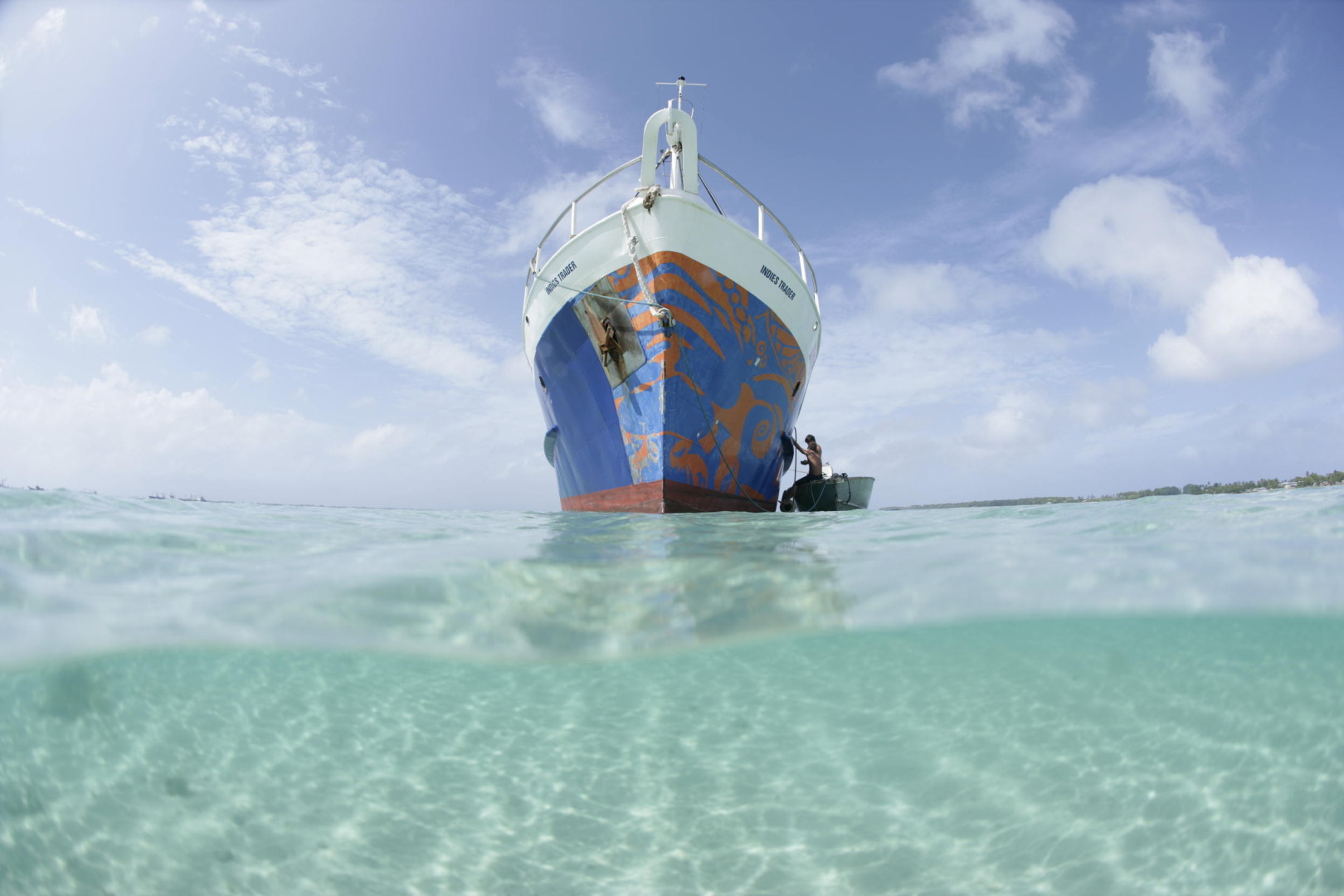
By late 1990 I owned the boat free and clear, my lifetime ambition achieved. Now I could go exploring whenever I wanted.- Martin Daly